Abschlussbedingungen
Anzeigen
 Use Case 5: Men´s outdoor occupations
Scenario:
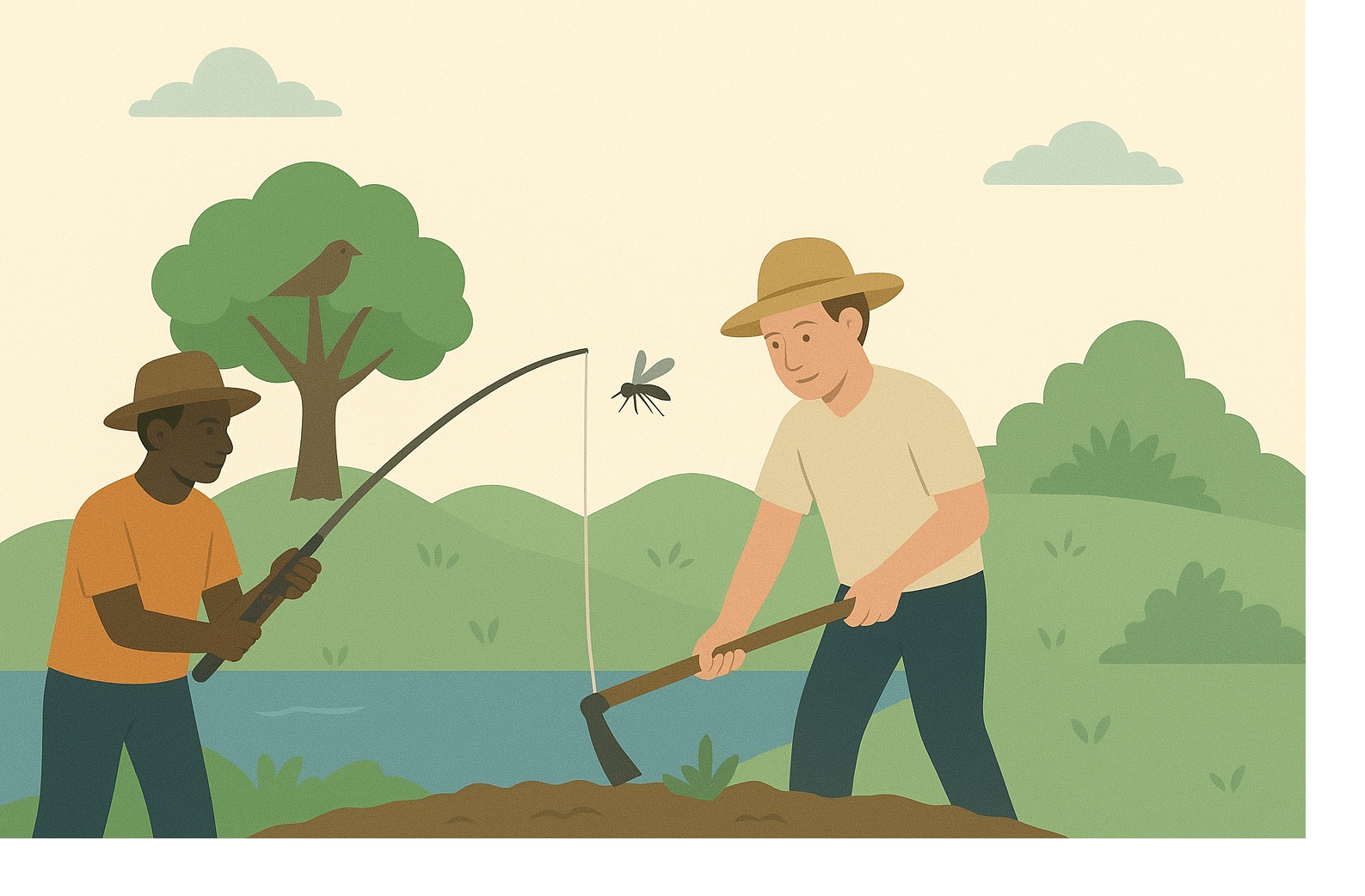
Men are more likely to work outdoors in occupations such as fishing or mining.These activities often occur during peak mosquito biting times, which increases men’s exposure to vector-borne diseases like dengue fever, malaria, or Zika.
Typical activities heightening women´s exposure to those mosquitos are outdoor working activities such as food preparation and cooking, firewood and water collection, or agricultural work.
Gender Considerations:
- Men’s outdoor work increases exposure to mosquito-borne infections.
- Lack of occupation data leads to underestimation of disease risk in male-dominated sectors.
- Public health messaging often fails to target occupational groups effectively.
- We need to be conscious that reporting does not always give us the whole picture of who is infected: Especially woman and poorer people oftentimes face barriers seeking testing, so the data might be biased.
Recommended Strategy:
- Use SORMAS to collect sex-disaggregated data on occupation and mobility.
- Develop tailored health communication campaigns for high-risk occupational groups.
- Consider social determinants of health when interpreting the data we have: Who is not represented in our data and why?
Zuletzt geändert: Dienstag, 10. Februar 2026, 11:02